Buy aquamania.eu ?
We are moving the project
aquamania.eu .
Are you interested in purchasing the domain
aquamania.eu ?
domain@kv-gmbh.de · 0541-91531010
Buy aquamania.eu ?
What is the difference between standard enthalpy of formation, enthalpy of formation, and reaction enthalpy?
The standard enthalpy of formation is the enthalpy change that occurs when one mole of a compound is formed from its elements in their standard states. Enthalpy of formation is the enthalpy change that occurs when one mole of a compound is formed from its elements in their standard states, but it can be under non-standard conditions. Reaction enthalpy is the enthalpy change that occurs in a chemical reaction, which can be exothermic (heat is released) or endothermic (heat is absorbed). **
What is enthalpy?
Enthalpy is a thermodynamic property of a system that represents the total energy of the system, including its internal energy and the energy required to maintain constant pressure. It is often denoted as H and is expressed in units of joules. Enthalpy is important in understanding and analyzing processes such as chemical reactions and phase changes, as it provides a measure of the heat content of a system. In practical terms, enthalpy change is often used to quantify the heat absorbed or released during a process at constant pressure. **


Similar search terms for Enthalpy
Top-Angebote
Products related to Enthalpy:
-
LightInthebox Hanging Mesh Pool Storage Bag, Large Capacity Swimming Pool Mesh Organizer Bag, Durable Breathable Mesh Storage Pouch For Pool Inflatable Toys, Swim Rings, Floats, Beach Balls And Swimming PoolMaterial:Flax,Polyester Fabric; Product Dimensions:145/84; Net Weight:0.55; Listing Date:04/30/202623,99 $*Shipping: 11,56 $Secure redirect to the provider
-
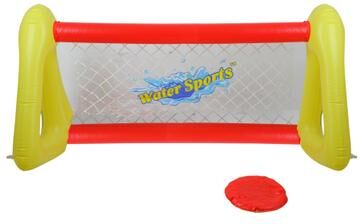
Pool Central "51"" Red and Yellow Inflatable Swimming Pool Water Sports Frisbee Game Set - 51 inches"Take your pool fun up a notch with this inflatable Water Sports Flying disc game set Suitable for salt and fresh water 8-gauge vinyl Includes: (1) inflatable goal frame with net (2) inflatable Flying discs Age: 3+33,99 $*Shipping: 0,00 $Secure redirect to the provider
-
All Categories Goods Swimming Pool Coasters Party Bar Accessories For Beach & Spa Relaxation Fun Outdoor Decor Swimming Pool Coasters Party Bar Accessories For Beach & Spa Relaxation Fun Outdoor DecorTransform your poolside or beach day into a fun, relaxing oasis with our Swimming Pool Coasters. These vibrant, floatable bar accessories are designed to keep your drinks stable while adding a pop of color to any pool, spa, or beach setting. Perfect...44,97 $*Shipping: 0,00 $Secure redirect to the provider
-
LightInthebox Women's Orange Barefoot Quick-Dry Water Shoes – Lightweight, Breathable, Non-Slip Aqua Socks for Beach, Swimming, Surfing, Pool, Yoga and Outdoor Water SportsMaterials:Cloth; Embellishment:Buckle; Season:Spring,Summer,Fall,Winter; Heel Type:Flat Heel; Gender:Women's; Size Suggestion:standard size, select your usual size; Toe Shape:Round Toe; Style:Casual,Comfort; Occasion:Indoor,Daily,Outdoor,Beach;...24,99 $*Shipping: 6,99 $Secure redirect to the provider



-
What is the difference between bond enthalpy and formation enthalpy?
Bond enthalpy is the energy required to break a specific chemical bond in a molecule, while formation enthalpy is the energy change when one mole of a compound is formed from its elements in their standard states. Bond enthalpy is specific to a particular bond within a molecule, while formation enthalpy is a measure of the overall energy change in forming a compound. Bond enthalpy is typically measured in kilojoules per mole (kJ/mol), while formation enthalpy is also measured in kilojoules per mole (kJ/mol). **
-
What is the enthalpy of vaporization of water?
The enthalpy of vaporization of water is the amount of energy required to convert one mole of liquid water at its boiling point into vapor at the same temperature. This value is approximately 40.7 kJ/mol at 100°C and 1 atm pressure. Enthalpy of vaporization is an important property of a substance and is used in various thermodynamic calculations and applications, such as in the design of heat exchangers and in the study of phase changes. **
-
What is Hess's law for standard formation enthalpy and combustion enthalpy?
Hess's law states that the total enthalpy change for a reaction is the same regardless of the number of steps taken to reach the final products. This principle can be applied to standard formation enthalpies and combustion enthalpies by using a series of known enthalpy changes to calculate the overall enthalpy change for a reaction. By manipulating and combining these known enthalpies, Hess's law allows us to determine the enthalpy change for reactions that may not be easily measured directly. **
-
What is the difference between standard formation enthalpy and enthalpy change?
Standard formation enthalpy is the enthalpy change that occurs when one mole of a compound is formed from its elements in their standard states. It is a specific type of enthalpy change that is measured under standard conditions. Enthalpy change, on the other hand, is a more general term that refers to the overall change in enthalpy of a system during a chemical reaction or process, regardless of whether it involves formation of a compound or not. Enthalpy change can be positive (endothermic) or negative (exothermic), depending on whether energy is absorbed or released during the process. **


How to calculate the reaction enthalpy from the molar bond enthalpy?
To calculate the reaction enthalpy from the molar bond enthalpy, you need to consider the difference between the sum of the bond enthalpies of the reactants and the sum of the bond enthalpies of the products. First, calculate the total bond enthalpy of all the bonds broken in the reactants, and then calculate the total bond enthalpy of all the bonds formed in the products. The reaction enthalpy is then the difference between these two values, with the bond enthalpies of the products subtracted from the bond enthalpies of the reactants. This calculation allows you to determine whether a reaction is exothermic (releasing heat) or endothermic (absorbing heat). **
What is Hess's law equation for standard formation enthalpy and combustion enthalpy?
Hess's law states that the overall enthalpy change for a reaction is the same regardless of the number of steps taken to reach the final products. For standard formation enthalpy, the equation is: ∆Hf°(products) = ∑∆Hf°(products) - ∑∆Hf°(reactants). For combustion enthalpy, the equation is: ∆Hcomb° = ∑∆Hf°(products) - ∑∆Hf°(reactants). These equations allow us to calculate the enthalpy change of a reaction using the enthalpies of formation of the reactants and products. **
Top-Angebote
Products related to Enthalpy:
-
Swim Central 4-In-1 Fun Pack Swimming Pool Games - Basketball Ring Toss Dive Rings and UFOSIncludes: deluxe basketball game (with inflatable basketball) ring toss deluxe dive rings and UFOS dive discs Some assembly required For ages 4 years and up Material(s): heavy-duty vinyl/plastic/fabric netting71,48 $*Shipping: 0,00 $Secure redirect to the provider
-
JML "Floral Beach Towel Quick Dry Swimming Pool Towel 30""x60"""A beach towel like no other! Beach bums and pool fans will love this thirsty towel with a bold design. It will make a unique statement no matter where their summertime adventures take them.26,49 $*Shipping: 0,00 $Secure redirect to the provider
-
LightInthebox Hanging Mesh Pool Storage Bag, Large Capacity Swimming Pool Mesh Organizer Bag, Durable Breathable Mesh Storage Pouch For Pool Inflatable Toys, Swim Rings, Floats, Beach Balls And Swimming PoolMaterial:Flax,Polyester Fabric; Product Dimensions:145/84; Net Weight:0.55; Listing Date:04/30/202623,99 $*Shipping: 11,56 $Secure redirect to the provider
-
Pool Central "51"" Red and Yellow Inflatable Swimming Pool Water Sports Frisbee Game Set - 51 inches"Take your pool fun up a notch with this inflatable Water Sports Flying disc game set Suitable for salt and fresh water 8-gauge vinyl Includes: (1) inflatable goal frame with net (2) inflatable Flying discs Age: 3+33,99 $*Shipping: 0,00 $Secure redirect to the provider
-
What is the difference between standard enthalpy of formation, enthalpy of formation, and reaction enthalpy?
The standard enthalpy of formation is the enthalpy change that occurs when one mole of a compound is formed from its elements in their standard states. Enthalpy of formation is the enthalpy change that occurs when one mole of a compound is formed from its elements in their standard states, but it can be under non-standard conditions. Reaction enthalpy is the enthalpy change that occurs in a chemical reaction, which can be exothermic (heat is released) or endothermic (heat is absorbed). **
-
What is enthalpy?
Enthalpy is a thermodynamic property of a system that represents the total energy of the system, including its internal energy and the energy required to maintain constant pressure. It is often denoted as H and is expressed in units of joules. Enthalpy is important in understanding and analyzing processes such as chemical reactions and phase changes, as it provides a measure of the heat content of a system. In practical terms, enthalpy change is often used to quantify the heat absorbed or released during a process at constant pressure. **
-
What is the difference between bond enthalpy and formation enthalpy?
Bond enthalpy is the energy required to break a specific chemical bond in a molecule, while formation enthalpy is the energy change when one mole of a compound is formed from its elements in their standard states. Bond enthalpy is specific to a particular bond within a molecule, while formation enthalpy is a measure of the overall energy change in forming a compound. Bond enthalpy is typically measured in kilojoules per mole (kJ/mol), while formation enthalpy is also measured in kilojoules per mole (kJ/mol). **
-
What is the enthalpy of vaporization of water?
The enthalpy of vaporization of water is the amount of energy required to convert one mole of liquid water at its boiling point into vapor at the same temperature. This value is approximately 40.7 kJ/mol at 100°C and 1 atm pressure. Enthalpy of vaporization is an important property of a substance and is used in various thermodynamic calculations and applications, such as in the design of heat exchangers and in the study of phase changes. **
Similar search terms for Enthalpy
-
All Categories Goods Swimming Pool Coasters Party Bar Accessories For Beach & Spa Relaxation Fun Outdoor Decor Swimming Pool Coasters Party Bar Accessories For Beach & Spa Relaxation Fun Outdoor DecorTransform your poolside or beach day into a fun, relaxing oasis with our Swimming Pool Coasters. These vibrant, floatable bar accessories are designed to keep your drinks stable while adding a pop of color to any pool, spa, or beach setting. Perfect...44,97 $*Shipping: 0,00 $Secure redirect to the provider
-
LightInthebox Women's Orange Barefoot Quick-Dry Water Shoes – Lightweight, Breathable, Non-Slip Aqua Socks for Beach, Swimming, Surfing, Pool, Yoga and Outdoor Water SportsMaterials:Cloth; Embellishment:Buckle; Season:Spring,Summer,Fall,Winter; Heel Type:Flat Heel; Gender:Women's; Size Suggestion:standard size, select your usual size; Toe Shape:Round Toe; Style:Casual,Comfort; Occasion:Indoor,Daily,Outdoor,Beach;...24,99 $*Shipping: 6,99 $Secure redirect to the provider
-
JML "Floral Beach Towel Quick Dry Swimming Pool Towel 30""x60"""A beach towel like no other! Beach bums and pool fans will love this thirsty towel with a bold design. It will make a unique statement no matter where their summertime adventures take them.30,99 $*Shipping: 0,00 $Secure redirect to the provider
-
JML "Floral Beach Towel Quick Dry Swimming Pool Towel 30""x60"""A beach towel like no other! Beach bums and pool fans will love this thirsty towel with a bold design. It will make a unique statement no matter where their summertime adventures take them.22,49 $*Shipping: 0,00 $Secure redirect to the provider
-
What is Hess's law for standard formation enthalpy and combustion enthalpy?
Hess's law states that the total enthalpy change for a reaction is the same regardless of the number of steps taken to reach the final products. This principle can be applied to standard formation enthalpies and combustion enthalpies by using a series of known enthalpy changes to calculate the overall enthalpy change for a reaction. By manipulating and combining these known enthalpies, Hess's law allows us to determine the enthalpy change for reactions that may not be easily measured directly. **
-
What is the difference between standard formation enthalpy and enthalpy change?
Standard formation enthalpy is the enthalpy change that occurs when one mole of a compound is formed from its elements in their standard states. It is a specific type of enthalpy change that is measured under standard conditions. Enthalpy change, on the other hand, is a more general term that refers to the overall change in enthalpy of a system during a chemical reaction or process, regardless of whether it involves formation of a compound or not. Enthalpy change can be positive (endothermic) or negative (exothermic), depending on whether energy is absorbed or released during the process. **
-
How to calculate the reaction enthalpy from the molar bond enthalpy?
To calculate the reaction enthalpy from the molar bond enthalpy, you need to consider the difference between the sum of the bond enthalpies of the reactants and the sum of the bond enthalpies of the products. First, calculate the total bond enthalpy of all the bonds broken in the reactants, and then calculate the total bond enthalpy of all the bonds formed in the products. The reaction enthalpy is then the difference between these two values, with the bond enthalpies of the products subtracted from the bond enthalpies of the reactants. This calculation allows you to determine whether a reaction is exothermic (releasing heat) or endothermic (absorbing heat). **
-
What is Hess's law equation for standard formation enthalpy and combustion enthalpy?
Hess's law states that the overall enthalpy change for a reaction is the same regardless of the number of steps taken to reach the final products. For standard formation enthalpy, the equation is: ∆Hf°(products) = ∑∆Hf°(products) - ∑∆Hf°(reactants). For combustion enthalpy, the equation is: ∆Hcomb° = ∑∆Hf°(products) - ∑∆Hf°(reactants). These equations allow us to calculate the enthalpy change of a reaction using the enthalpies of formation of the reactants and products. **
* All prices are inclusive of VAT and, if applicable, plus shipping costs. The offer information is based on the details provided by the respective shop and is updated through automated processes. Real-time updates do not occur, so deviations can occur in individual cases. ** Note: Parts of this content were created by AI.